
In Commercial Landscaping, the Account Manager role comes to life during the Site Walk. This is where the property is evaluated, customer priorities are understood, and the next actions are defined. The value of a site walk is only as good as what gets captured.
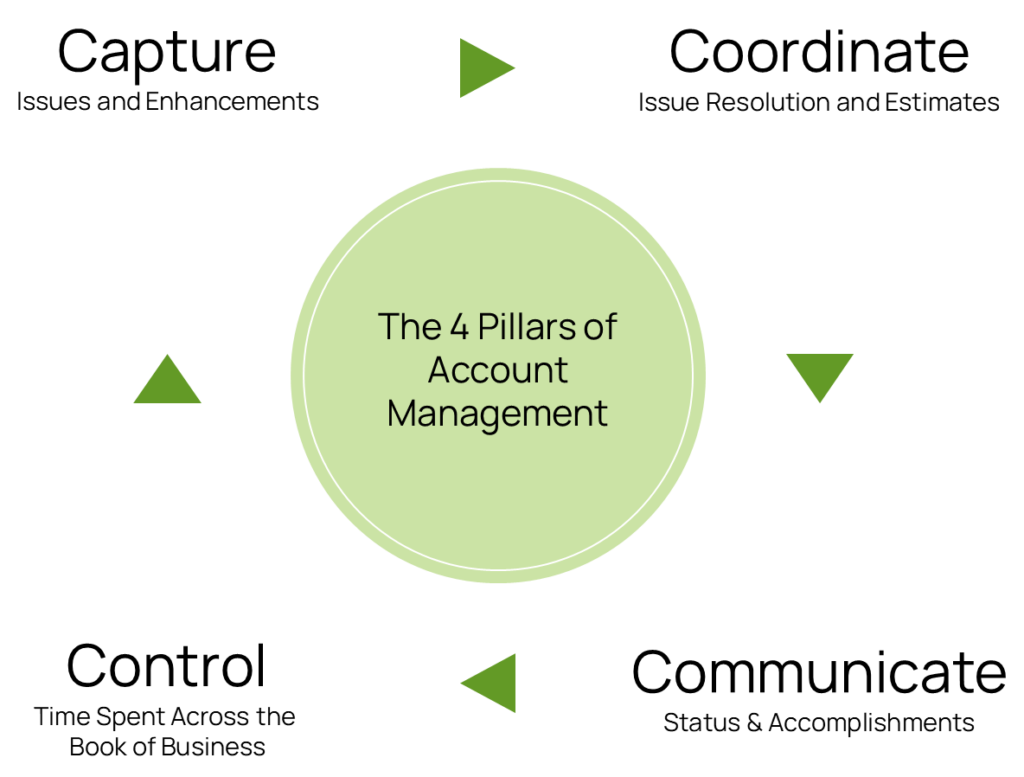
This post is the first in a four part series on the core disciplines that drive effective account management: Capture, Coordinate, Communicate, and Control. We start with Capture because everything else depends on it. If Issues and Enhancements are not clearly identified and documented during the Site Walk, everything that follows becomes harder.
Start with a simple structure
Strong Account Managers capture three types of information on every visit:
Issues. These are service gaps that need to be corrected.
Enhancements. These are opportunities to improve the property outside the current scope.
Highlights. These are notable observations worth sharing or tracking.
This structure keeps things focused and ensures that important information is not missed. It also creates consistency for crews, internal teams, and customers who rely on that information later.
Capture in real time
Waiting until after the visit to document what you saw is one of the most common failure points. Details tend to fade quickly, context gets lost and small issues can be forgotten.
Capturing in real time preserves accuracy and reduces the need to reconstruct what happened later. It also shortens the time between identifying an issue and getting it resolved.
Use photos as your primary tool
A clear photo, paired with location, often does most of the work. It shows the crew exactly what needs attention, gives the customer confidence that you are paying attention to detail, and reduces back and forth to improve time to resolution.
In many cases, a photo communicates more effectively than a written description.
Capture what is needed and no more
There is a balance to strike. Too little information leads to confusion and missed follow through. Too much information slows you down and creates noise for everyone downstream.
The goal is to capture what is necessary to take action later without adding detail that doesn’t support these goals.
Be deliberate about how you walk the property
Good capture starts with a plan.
Use a site map when possible so you cover the property systematically. Pay extra attention to high visibility areas such as entrances, main drive lanes, and places the customer sees every day. Follow a consistent path so nothing is overlooked.
This improves both the quality and consistency of what you capture.
Capture with the end use in mind
Every note, photo, and observation should serve a purpose.
- Will it support a customer update
- Will it help a crew fix an issue
- Will it turn into an enhancement proposal
When capture is aligned with how the information will be used, everything downstream becomes faster and easier.
In the next post, we will focus on Coordinate and how to turn what you capture into timely, consistent execution across your team.